Taking Control of Your Finances with an Income Tracker Printable Template
Keeping a clear view of your earnings can feel surprisingly difficult when money comes in from multiple directions. Freelance gigs, side hustles, rental income, dividend payments, and even irregular overtime all blur together without a reliable system. Many adults reach a point where they simply want to know exactly what is happening with their money without relying on complicated software or subscription-based apps. An income tracker printable template offers a straightforward, physical way to log and review every dollar that comes in, helping you build awareness and make better decisions over time.
This article explores how a well-designed printable income tracker can support your financial goals, what practical challenges it helps solve, and how to make the most of it in everyday life. We will also look at how different users approach income tracking and why having options in format and size makes a significant difference for long-term consistency.
What Is an Income Tracker Printable Template?
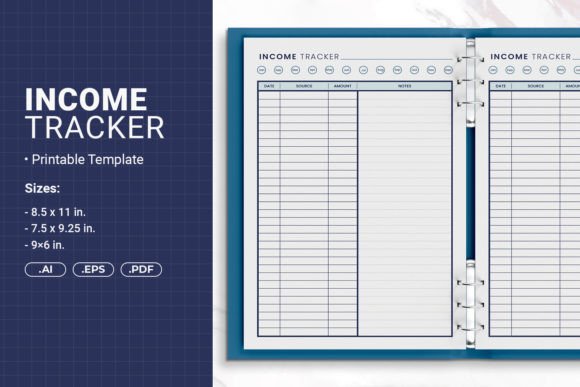
At its core, an income tracker printable template is a structured document you can print at home or through a professional service to record your earnings manually. Unlike digital spreadsheets or mobile apps that require logins, updates, and battery power, a printed tracker sits on your desk or inside a binder, ready whenever you need it. The simplicity removes friction. You write down the date, the source of income, the amount, and any notes relevant to that entry.
The version we are focusing on here includes several thoughtful design decisions that make it stand out. It arrives in three different sizes, supports full-bleed printing for a polished look, and leaves a safe margin for hole-punch binding. These features mean the template can function as a standalone tracker, part of a larger financial binder, or even as a published book interior for those interested in creating income-tracking journals for sale on platforms like Amazon KDP. The package provides open-source AI Illustrator files, EPS files, and ready-to-use PDFs, giving you complete control over how the final product looks and works.
Why Manual Income Tracking Still Matters
Automated banking apps show you transactions, but they rarely help you internalize your earning patterns. When you manually write down each income source, you engage with the numbers in a way that passive observation cannot replicate. This active involvement often leads to better recall, stronger motivation, and a heightened sense of accountability. For freelancers and gig workers, this practice becomes even more valuable because income streams are often unpredictable. A printable tracker lets you see at a glance which months were strong, which clients paid late, and where gaps appeared.
Another practical advantage is independence from technology. Software changes, subscriptions expire, and devices fail. A physical income tracker printable template remains accessible regardless of internet outages or app updates. For people who prefer tangible records or who keep a financial binder for tax preparation, having printed pages organized by month or quarter creates a reliable paper trail that can be referenced years later without worrying about file compatibility.
Addressing Common Financial Organization Challenges
Many adults struggle with fragmented financial records. Bank statements arrive on different dates, payment processors send separate notifications, and cash earnings often go unrecorded entirely. This fragmentation makes it difficult to answer simple questions like how much you actually earned last month or whether your side business is growing. An income tracker solves this by consolidating everything into one consistent format that you control.
Another challenge is preparing for tax season. Self-employed individuals, contractors, and small business owners need accurate income summaries to file correctly and claim appropriate deductions. Waiting until March to comb through scattered records creates stress and increases the likelihood of errors. By using a printable income tracker throughout the year, you build your tax summary incrementally, and the task becomes far less daunting. The safe margin for hole punching means you can store completed pages in a dedicated binder with dividers for each tax year, keeping everything organized and accessible when your accountant needs it.
How Different Users Benefit from an Income Tracker Printable Template
Not everyone tracks income the same way, and the flexibility of a printable template accommodates various approaches. Consider a few common user scenarios:
- Freelancers and independent contractors often juggle multiple clients with different payment schedules and rates. They benefit from logging each invoice payment separately, noting client names and project references. Over time, this record reveals which clients contribute most to their bottom line and which ones consistently pay late.
- Side-hustle entrepreneurs running small Etsy shops, delivery services, or weekend consulting gigs need a simple way to separate this income from their primary job earnings. A dedicated income tracker for their business activities helps them evaluate profitability and decide whether to invest more time into the venture.
- Households managing rental properties can use separate tracker pages per property to monitor rent collection, late fees, and maintenance-related reimbursements. This clarity simplifies year-end reporting and tenant communication.
- Retirees or individuals with investment income may track dividends, interest payments, and pension distributions to ensure they are meeting their monthly budget targets without dipping too heavily into principal.
- Self-publishing authors and content creators may use the template not only for personal tracking but also as a product to sell. The Amazon KDP-ready format with bleed and multiple size options makes it possible to create a professional income tracker book that customers can purchase.
Exploring the Three Size Options and Their Practical Uses
The income tracker printable template comes in three distinct dimensions, and each serves a specific purpose. Understanding these options helps you choose the right one for your situation or even use different sizes for different needs.
The 8.5 x 11 inch format is the classic letter size familiar to most North American users. This larger canvas gives you ample room for detailed entries, including longer client names, project codes, and extensive notes. It fits standard three-ring binders perfectly, and the hole-punch margin ensures nothing gets clipped when you add pages to your financial binder. If you track complex income streams or simply prefer more writing space, this size works beautifully.
The 7.5 x 9.25 inch format offers a compact but still roomy alternative. It sits comfortably between the full letter size and smaller journal dimensions. Many users find this size ideal for a dedicated financial planner that stays on their desk without dominating the workspace. It also pairs well with other planner inserts if you use a disc-bound or ring-bound planning system. The professional proportions make it suitable for self-publishing authors who want to offer something slightly different from the standard sizes found in most bookstores.
The 6 x 9 inch format is a highly portable option that slips easily into a bag, purse, or glove compartment. This size is popular for on-the-go tracking, such as logging cash tips, market sales, or ride-share earnings throughout the day. It also happens to be one of the most common trim sizes for paperback books on Amazon KDP, making it an excellent choice for creators who want to publish income-tracking journals for a broad audience. Despite its smaller footprint, the template layout is designed to remain clear and usable without feeling cramped.
Customization Potential and Professional Presentation
One of the standout aspects of this particular template package is the inclusion of open-source AI Illustrator files along with EPS and PDF formats. This means you are not locked into the original design. If you want to adjust fonts, add your brand logo, change the color scheme, or modify the column headings, you have full creative control. For small business owners who want their financial trackers to match their brand identity, this customization capability transforms a generic template into a personalized business tool.
The template is also designed with bleed, which is essential for professional printing. Bleed refers to the extended design elements that run past the trim edge, preventing white borders from appearing after cutting. Whether you print at home on high-quality paper or send the file to a commercial printer for a perfect-bound book, the result looks polished and intentional. For self-publishers uploading to Amazon KDP, bleed-ready files are a requirement for certain print options, and this template meets that specification out of the box.
Implementing an Income Tracking Routine That Sticks
Having a great template is only part of the equation. Building a consistent habit around using it determines whether you see real results. Here are a few practical recommendations for making income tracking a natural part of your routine:
- Choose a regular time slot. Sunday evenings or Monday mornings work well for many people. Use this time to review the past week's deposits, payments, and cash receipts, then log them in your tracker.
- Keep the tracker visible. If your printed pages sit buried in a drawer, you will forget they exist. Place your income tracker binder or folder somewhere you see daily, perhaps near your computer or on your home desk.
- Log income as it arrives. For unpredictable earnings, waiting until the end of the month may lead to forgotten entries. Jot down payments the same day whenever possible.
- Review patterns monthly. At the end of each month, spend fifteen minutes reviewing your tracker. Look for trends, note any concerning dips, and celebrate increases. This reflection turns raw data into actionable insight.
- Store completed pages securely. Since income information is sensitive, consider keeping filled pages in a locked cabinet or a password-protected digital scan folder after you no longer need the physical copies on hand.
Using the Template for Self-Publishing and Business Ventures
Beyond personal finance, the income tracker printable template opens doors for creative entrepreneurs. The self-publishing market on Amazon KDP continues to grow, and low-content books such as planners, journals, and trackers represent a significant portion of sales. With the provided AI, EPS, and PDF files, you can upload a professionally designed income tracker book ready for print, complete with bleed and proper margins. The three size variations allow you to test different formats and see which resonates with your target audience.
Interior designers, book coaches, and stationery shop owners can also incorporate these templates into their product lines. Because the Illustrator files are open-source, you can integrate the tracker pages into a larger financial planner, add instructional pages, or bundle them with budgeting worksheets to create a comprehensive money management toolkit. The safe margin for hole punching means your customers can use the pages in their own binders without losing content, which adds tangible value and reduces returns or complaints about usability.
Why Paper-Based Tracking Complements Digital Tools
Some people hesitate to use printable templates because they already use apps or spreadsheets. In reality, the two approaches complement each other beautifully. Digital tools excel at automatic categorization, running calculations, and generating graphs. A physical income tracker excels at keeping you grounded, focused, and mindful of each entry. Many financially organized individuals use both: a printed tracker for daily or weekly logging and a spreadsheet for quarterly summaries and projections. The act of transferring paper records to digital format also provides a natural review checkpoint where errors or missing entries become visible.
Additionally, a paper tracker serves as a backup. If your hard drive fails or an online service goes offline permanently, your financial history remains intact in your binder. For anyone who has lost data to a crashed app or an expired subscription, this redundancy provides genuine peace of mind.
Making the Right Choice for Your Financial Journey
Selecting an income tracker printable template is ultimately about aligning the tool with your habits, goals, and preferences. If you value simplicity and tangibility, the printable format removes distractions and keeps you focused on what matters. If you need flexibility in size, the availability of three formats lets you test what fits your workflow best. If you plan to publish or sell your own version, the included source files give you everything required to produce a professional, market-ready product.
Financial clarity does not require expensive software or complex systems. Often, a well-designed page, a pen, and the willingness to show up consistently are all you need to transform how you understand and manage your income. Whether you track freelance payments, rental checks, or daily tips, the habit of recording what you earn builds confidence, reduces uncertainty, and empowers you to plan for the future with greater certainty.