Streamlining Small Cash Tracking with a Practical Petty Cash Book
Managing day-to-day expenses doesn’t always require complex software. For countless small businesses, freelancers, event organizers, and even busy households, a physical or printable Petty Cash Book remains one of the most straightforward ways to log minor outflows. The right logbook doesn’t just capture numbers; it brings clarity to spending patterns, simplifies reconciliation, and creates a reliable paper trail that digital tools sometimes overlook. A template like the Petty Cash Logbook under discussion offers exactly that—a structured, repeatable format designed to take the friction out of manual cash tracking.
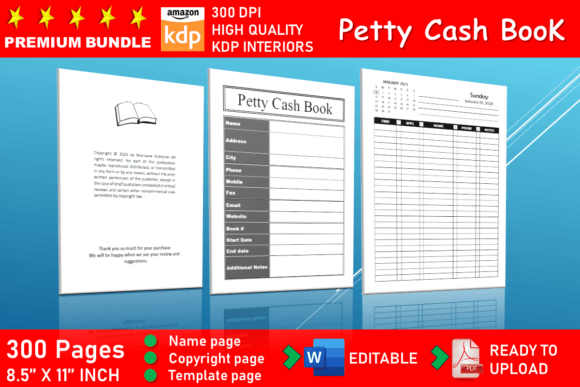
At its core, this Petty Cash Book is a 120-page log template that comes in an 8.5 x 11 inch layout. That’s a deliberate size, large enough to prevent cramped handwriting yet compact enough to slip into a standard filing box, a binder, or a desk drawer. The availability of multiple formats—PPT, PDF, and a zipped package—immediately broadens its appeal. You aren’t locked into a single printing method or forced to buy a pre-printed ledger. This flexibility is what sets it apart from generic office supply store booklets. Whether you need to print a handful of pages for a short-term project or bind a full book for a year’s worth of entries, the template adapts to your workflow.
Why a Dedicated Tool Still Matters in a Digital Age
It’s tempting to think spreadsheets or apps have entirely replaced paper logs. In practice, they haven’t. A physical Petty Cash Book lives at the point of transaction—the cash box, the front desk, the event ticket booth—where pulling out a phone or booting up a laptop isn’t always practical. It removes the barrier of logging into a system and navigating menus. When someone reaches for a few dollars for parking meters or office snacks, they can jot down the amount, date, and purpose in seconds. That immediacy often translates into more accurate, timely records.
The template approach also solves a common frustration: running out of pages mid-year and having to buy an entirely new book that may not match the old one. With a downloadable Petty Cash Book, you can print exactly the number of pages you need—say, 30 for a seasonal pop-up or a full 120 for a twelve-month cycle. Duplicates can be kept for backup or distributed across multiple locations without additional cost.
Key Characteristics That Set This Logbook Apart
Good petty cash management hinges on consistency of entry fields. This template includes columns for date, description, amount disbursed, amount received, and a running balance. Some versions also offer a section for account codes or category tags, which is particularly useful when expenses need to be grouped later—office supplies, travel, client meeting costs, or staff reimbursements. The design doesn’t overcomplicate things, but it provides enough structure that reviewing a month’s worth of entries becomes a matter of scanning, not decoding.
The 8.5 x 11 inch format is standard letter size, which means it works with any home or office printer and fits into three-ring binders or presentation folders without trimming. That’s a small detail that pays off when you want to archive records by month or event. A larger page also leaves room for notes in the margins—something smaller pocket-sized books rarely accommodate—so you can annotate unusual transactions or add initials for audit purposes.
Another practical strength is the inclusion of an editable source file (PPT) alongside the PDF. While many logbook templates are locked, this one allows you to tweak column headers, add a company logo, or adjust the starting balance line before printing. That’s a genuine advantage for businesses that need a branded petty cash sheet or want to include internal codes for expense classification. Even a freelancer might modify the description field to track client-project-related petty spending. The ZIP file consolidates these formats neatly, making it easy to store and share.
Real-World Performance and Usability
In testing a printed version of this Petty Cash Book across a small retail counter and a home office setup, a few things become clear. The layout is clean and uncluttered. The lines aren’t so faint that they disappear after photocopying, and the column spacing accommodates average handwriting without forcing entries into undersized boxes. The running balance column is particularly helpful for those who need to reconcile the physical cash on hand against the recorded total at a glance. Instead of adding up a month’s worth of slips, you can simply check today’s ending balance, count the cash, and spot discrepancies immediately.
One often overlooked aspect of paper logs is durability during heavy use. Since this is a printable template, the longevity depends on the paper you choose and how you protect the pages—perhaps with a clear binder sleeve or a light cardstock cover. For high-traffic environments where the logbook might get coffee spills or frequent handling, printing on slightly heavier paper (28lb or 32lb) makes a noticeable difference. The template itself remains crisp at standard weight, so it’s adaptable to whatever stock your printer handles best.
For those using the PPT file to create custom versions, a word of caution: the formatting can shift slightly if you change too many column widths without adjusting the table properties. This is minor and won’t affect most users, but it’s worth keeping a backup of the original file. The PDF is locked and prints reliably across devices, which is what makes it the go-to for quick, consistent output.
Who Benefits the Most from a Printable Petty Cash Log
The audience for a Petty Cash Book like this is wider than classic bookkeepers. Small business owners—think café managers, boutique shop owners, or independent tradespeople—can keep a running record of small purchases without relying on receipt hoarding alone. School offices and PTA treasurers handling bake sale or field trip money find the large-format pages easy to pass around among volunteers. Freelance event planners or photographers who handle cash for incidentals benefit from a paper trail that doesn’t depend on phone battery life or app subscriptions.
KDP publishers and creators of low-content books might also view this template as a valuable base for resale or for building their own adapted products. Because the file comes in PPT format, the layout can be tweaked, rebranded, and repurposed within KDP’s guidelines—though careful review of formatting margins for bleed is required before uploading. Even if you never plan to resell, having the source file gives you the freedom to create multiple variants for different company departments without purchasing separate books.
Budget-conscious households can use a simplified version to track weekly cash for groceries, allowances, or shared house expenses. The log format encourages accountability in a way that verbal agreements don’t. When everyone writes down what they take from the household petty cash jar, those mysterious “where did the money go?” conversations become rare.
Potential Limitations to Keep in Mind
No tool is perfect. A 120-page Petty Cash Book is generous for a single year of typical small-volume use, but high-transaction environments might fill it in a few months. In that case, printing double-sided or reducing the number of rows per page (by customizing the PPT) can extend its life, but the fixed page count is still finite. Users who need continuous, linked records across multiple books may find themselves manually carrying over balances, which paper logs inherently require. An Excel spreadsheet might offer automated rollovers, but it also demands device access and a bit of setup—trade-offs that each user weighs differently.
Also, the template itself doesn’t enforce discipline. It’s a blank canvas. If staff members fail to log every small expense, the record will be incomplete regardless of how well-designed the columns are. Pairing the Petty Cash Book with a simple rule—like “no reimbursement without a log entry”—turns it from a passive notebook into an active control tool. That’s a behavioral implementation detail, not a flaw of the product, but it’s essential to mention for realistic expectations.
Some might wish for pre-numbered pages or a more formal index section. While you can number pages by hand, the template doesn’t include automatic page numbering. Adding a simple footer in the PPT before printing solves this in seconds, so it’s a minor inconvenience. The absence of a built-in cover or binding means you’ll need to assemble the finished book yourself, but for many, the cost savings and customizability far outweigh the DIY assembly.
Quality, Presentation, and Long-Term Value
The visual design of the template is professional without being over-designed. It relies on clear lines and legible typography rather than heavy graphics, which keeps the focus on the data. When printed, the pages look sharp enough to be included in a financial binder presented to a board or an accountant at year-end. That level of polish matters when you’re trying to project credibility, even with something as humble as a petty cash log.
Long-term, the digital file format offers a lasting resource. Unlike a printed book that wears out and must be repurchased, this Petty Cash Book can be reprinted indefinitely. Versioning is also possible—create a monthly log, a weekly summary sheet, or a project-specific variant, all from the same core file. That kind of reuse extends the value well beyond a single physical item’s lifespan. It’s a one-time acquisition that evolves with needs.
However, buyers shouldn’t expect robust interactive features in the PDF; it is designed primarily for printing and manual completion. That’s in line with its purpose. If you need digital auto-calculation, a spreadsheet template would be a better fit. This logbook sits firmly in the space where paper records remain the most practical, reliable, or even required format—for cash-based businesses, for quick on-the-spot logging, or for those who simply prefer a tangible record.
Practical Recommendations for Getting the Most Out of It
To maximize usefulness, define a clear start date and initial float amount on the first page. Print a fresh batch of pages for each month or each major event with that information already filled in. If you operate in multiple currencies, duplicate the file and label each version clearly in the headers. Keep the digital file backed up in cloud storage so that even if your printed stock runs out unexpectedly, you can generate new pages from any device.
For businesses that undergo audits, staple receipts directly to the relevant page and note the receipt number in the description column. The large format gives you room to do this without obscuring entries. Over time, this creates a self-contained audit trail that an external reviewer can follow easily. It’s a small practice that can significantly reduce year-end stress.
KDP publishers and designers who intend to adapt the template should pay close attention to the PPT file’s internal margins and table properties. Amazon’s KDP print guidelines require specific bleed settings for books that have content extending to edges. Since this is a lined template, keeping content within safe margins is usually straightforward, but resizing for a 6x9 inch or 7x10 inch book will require some design adjustments. The source file gives you the flexibility to do that without starting from scratch.
Finally, consider pairing this Petty Cash Book with a simple monthly summary sheet of your own making—just a page that lists totals for each expense category at month-end. You can create that in the same PPT file as an appendix page, then print it alongside your logs. This small addition bridges the gap between daily tracking and higher-level financial reports, making the entire system more cohesive.
Matching the Tool to Your Workflow
The real test of any administrative tool is whether it gets used consistently. This Petty Cash Logbook template removes enough friction—multiple format options, generous page count, editable source—that it stands a strong chance of becoming a staple rather than a forgotten download. It doesn’t try to do everything, and that’s its strength. It focuses on capturing the essential elements of petty cash transactions and presenting them in a readable, reproducible format that works across many contexts.
For entrepreneurs tracking startup expenses, for church groups managing donation-based cash boxes, for freelancers needing a clean record of travel incidentals, this template hits a sweet spot between simplicity and functionality. The minor limitations around manual assembly and finite page counts are far outweighed by the flexibility and professional appearance. When you need a system you can touch, mark, and file without thinking about software updates or battery life, a well-designed Petty Cash Book is still one of the most trustworthy tools you can deploy.