Building Confidence in Number Writing with Preschool Children Number Tracing Pages
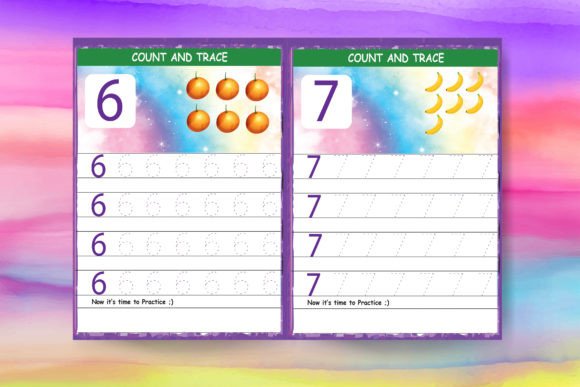
As a parent, educator, or caregiver helping a child take their first steps into the world of numbers, you’ve likely encountered Preschool children number tracing pages. These deceptively simple sheets—featuring dotted outlines and cheerful illustrations—are foundational tools in early math and writing development. Their popularity stems from their direct approach: they offer a clear, guided path for a child’s hand to follow, building the muscle memory needed for number formation. However, their effectiveness isn’t guaranteed by simply handing a child a page and a pencil. The real value lies in understanding how to select and use these resources strategically, avoiding common pitfalls that can turn a beneficial activity into a frustrating chore.
Choosing the Right Foundations: Beyond Just Pretty Pictures
A common oversight is selecting tracing pages based solely on visual appeal. While engaging graphics are important for capturing a preschooler’s attention, the underlying structure is what truly fosters learning. Many commercially available sets or free downloads use fonts and number forms that are stylized or inconsistent. For example, a page for the number “4” might present it in a closed-top style, while another resource uses an open-top version. This inconsistency confuses young learners who are striving to recognize and replicate a stable symbol.
Practical advice: Before downloading a pack or purchasing a workbook, scrutinize a sample page. Check for consistency in the number forms across all pages (0-9). The tracing lines should be clear, adequately spaced for a child’s pencil or crayon, and present the number in a standard, widely-recognized style. Prioritize resources that offer a clean, simple design alongside the fun imagery. The picture of “three apples” should support the learning of the numeral “3”, not distract from it.
The Mistake of Skipping the “Why” Before the “How”
Another frequent misunderstanding is treating number tracing as a purely mechanical skill. Introducing tracing pages without first establishing number sense—the understanding of what a number represents—can lead to disconnection. A child might perfectly trace the numeral “5” but not connect it to the quantity of five blocks or five fingers. The tracing activity becomes an abstract drawing exercise rather than a meaningful literacy skill.
How to integrate better: Always pair the tracing activity with concrete, hands-on counting. Before your child traces the number “4”, count out four toys together. As they trace, verbally reinforce the connection: “You’re writing the number four, and we just counted four cars!” This makes the Preschool children number tracing pages a part of a larger, richer learning conversation, not an isolated task.
Navigating the Fine Motor Skill Gap
A significant challenge adults overlook is the mismatch between a child’s fine motor development and the difficulty of the tracing task. Numbers like “2”, “3”, and “8” involve curves and directional changes that are surprisingly complex for little hands. Presenting a full set of 0-9 pages all at once, or expecting perfect accuracy, can lead to fatigue, frustration, and a negative association with writing.
A more supportive approach is to introduce numbers in a progression based on motor difficulty, not numerical order. Start with simpler numerals like “1” and “7”, which involve mostly straight lines. Then gradually introduce “0” and “4”, before tackling the more curved “2”, “3”, “5”, and “8”. Celebrate the attempt and the process, not just the final product. Using thicker markers or crayons can also help children who are still developing pencil grip.
The Overlooked Power of Multi-Sensory Alternatives
While paper pages are convenient, relying on them exclusively misses a key opportunity for multi-sensory learning. Some children learn better by feeling a shape. If a child struggles with the pencil-on-paper method, don’t persist to the point of frustration—it’s not a failure of the tracing page, but a sign to adapt the method.
Better choices include: Creating your own tracing paths using finger paint, tracing numbers in a sand tray with a stick, or forming numbers out of playdough. These activities still teach the form and sequence of the numeral but engage different senses. You can then return to the paper Preschool children number tracing pages as one of many tools, not the only tool.
Evaluating Digital vs. Physical Resources
In today’s digital age, numerous apps and websites offer interactive number tracing. These can be engaging, with instant feedback and sound effects. However, a crucial mistake is assuming digital tracing perfectly substitutes for physical tracing. The tactile feedback of pencil on paper, the resistance, and the full arm movement are integral to developing the muscle memory for handwriting. Digital tracing often involves a swiping motion on a smooth screen, which is a different physical skill.
A balanced strategy is to use both, but with clear intent. Use digital apps for engagement, reinforcement, or as a fun reward. Use physical Preschool children number tracing pages as the primary method for building handwriting readiness. Always ensure screen time is moderated and that the primary learning goal—physical writing skill—is being met with real-world materials.
What to Check Before You Commit or Download
Whether you’re buying a workbook, subscribing to a website, or downloading free PDFs, a few key checks can save you time and ensure a better experience for the child.
- Scope and Sequence: Does the resource introduce numbers logically? Is there a clear order or progression suggested?
- Support Materials: Are there accompanying activities, like counting exercises or simple math problems, that extend the learning beyond just tracing?
- Print Quality: For physical pages, are the lines crisp and dark enough to see easily? For digital, is the tracing path responsive and clear?
- Flexibility: Can the pages be used repeatedly? Some are designed for one-time use, while others, like laminated pages or dry-erase formats, offer more value.
Ultimately, Preschool children number tracing pages are not just worksheets; they are bridges between understanding a quantity and symbolizing it. By choosing them thoughtfully, integrating them with broader number activities, respecting the child’s motor development, and using them as part of a varied sensory approach, you transform a simple tracing task into a powerful, confidence-building step in a child’s educational journey. The goal isn’t perfect penmanship on day one, but fostering a positive, resilient attitude toward learning that numbers can be both understood and written.