Bordered Stationery Printable Paper 209 for Creatives
Some printable papers fade into the background. Others, like Bordered Stationery Printable Paper 209, give you a foundation you can actually build on. This isn't just a decorative page. It's a structured starting point—a clean, versatile sheet with a defined border that frames whatever you decide to put inside it. Along with it comes a thoughtfully assembled set of printable papers: one unlined bordered paper, one sheet of graph paper, and two distinct lined papers. All of them are formatted to an 8.5×11-inch trim size at 300 DPI and delivered as both PNG and PDF files. That combination of formats and paper types opens a wide lane for creative and commercial work alike.
The real value here lies in how these pages can be adapted. Whether you're building a no-content or low-content book for Amazon KDP, designing a custom planner, putting together stationery sets, or working on a hands-on craft project, the materials are flexible enough to support nearly any direction you take. The border design provides visual structure without crowding the page. The additional paper types—graph and lined—fill in the gaps when you need variety in a single project or product line.
What Makes the Bordered Design Stand Out
Bordered stationery carries a certain gravity. It signals intention. A blank sheet can feel intimidating, but a border creates a defined space. It tells the writer or the user: this area is yours to fill. Bordered Stationery Printable Paper 209 leans into that psychological nudge. The border is present but not overpowering, which means it works for both formal and casual applications. You can use it for letter-writing templates, journaling inserts, invitation drafts, or even as a signature page in a digital planner.
Because the border remains consistent, it also helps maintain visual cohesion across a multi-page product. If you're assembling a workbook, a journal, or a planner, having a recurring bordered framework ties everything together. The eye learns the layout quickly, and that familiarity makes the content feel more polished and intentional.
Inside the Set: Four Papers, Multiple Approaches
The collection doesn't stop at one sheet. It includes four distinct papers, each with a different internal structure. This is where the practical flexibility really kicks in. You're not locked into a single format. You can mix and match, or use each paper for a completely separate purpose.
1 x Unlined Bordered Paper
The unlined bordered sheet is the most open-ended of the group. Without ruling lines inside the border, it's free for sketching, freewriting, mind mapping, collage, or any visual brainstorming. For KDP publishers, this is the ideal base for a blank journal interior. Pair it with a compelling cover and you've got a product ready to list. For crafters, it's a beautiful foundation for handwritten letters, custom art prints, or event stationery.
1 x Graph Paper
Grid paper consistently ranks among the most requested interior types in the low-content book space. Bullet journalers, math students, designers, engineers, and gamers all use graph paper regularly. The included graph sheet fits standard 8.5×11-inch trim and prints crisply at 300 DPI. Use it as a standalone product—a graph paper notebook—or blend it into a mixed-format planner where certain sections benefit from a grid structure. The grid also works well for habit trackers, floor plan sketches, or cross-stitch pattern design.
2 x Lined Papers
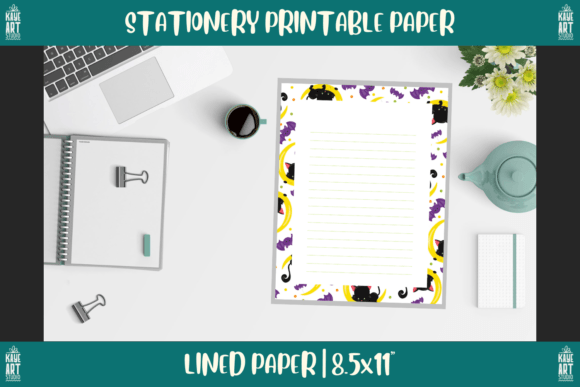
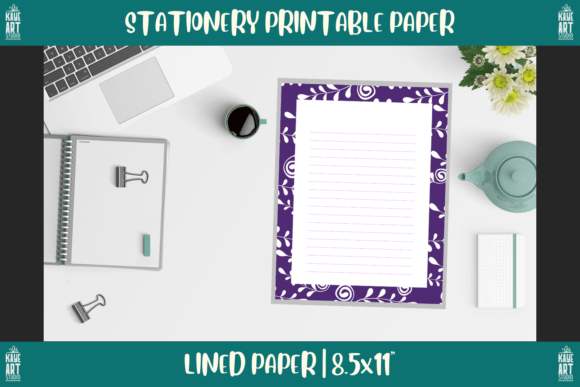
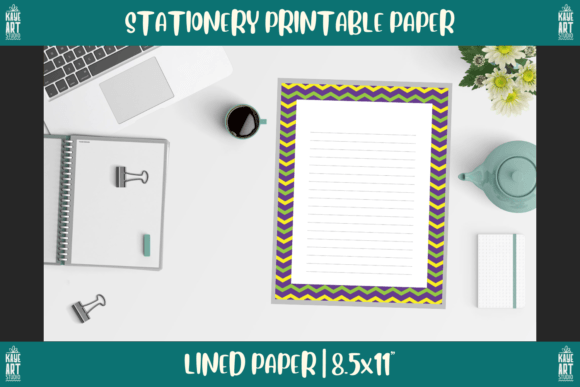
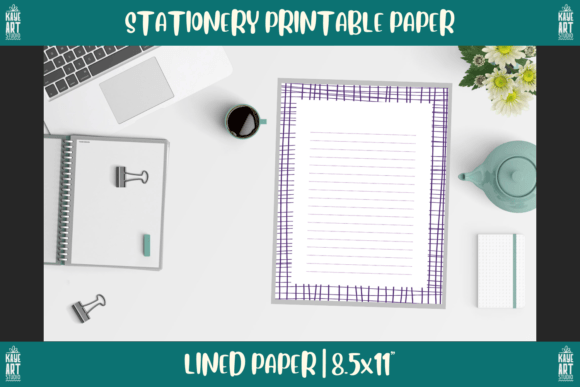
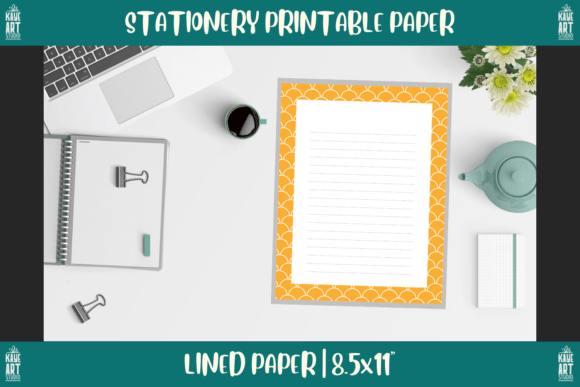
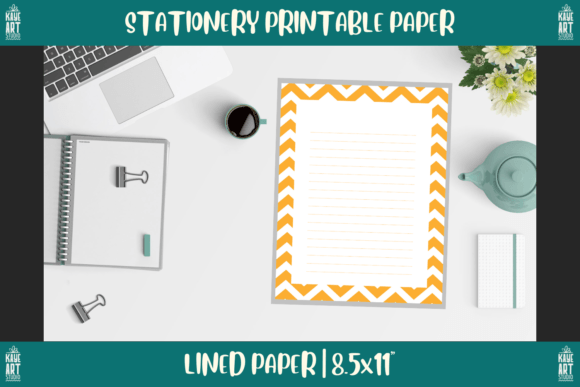
Two lined papers might sound redundant, but variety in ruling can make or break a user's experience. One might use a standard college-ruled spacing while the other offers wide-ruled or a subtly different line weight or margin treatment. The presence of two lined options means you can cater to different audiences without sourcing additional templates. Writers who prefer more space between lines will gravitate toward one; those who write small or need to fit more on a page will choose the other. In a digital planner, you can offer both as selectable page styles, increasing the perceived value of your product.
KDP and Low-Content Publishing Opportunities
Amazon's KDP platform thrives on well-made, niche-specific interiors. Bordered Stationery Printable Paper 209 and its companion sheets give you a ready-to-use foundation for multiple book types. Because the files come in both PNG and PDF formats, you can drop them directly into your manuscript or use them as individual inserts. Upload the PDF for a print-ready interior, or use the PNGs to build templates in Canva, Affinity Publisher, or Adobe InDesign.
A few realistic product ideas include:
- Bordered journal for letter writing practice — position the unlined bordered paper as a guided space for penmanship or calligraphy.
- Mixed-format student planner — combine graph paper for scheduling grids with lined paper for note-taking sections.
- Creativity workbook — alternate between unlined pages for sketching and lined pages for reflection prompts.
- Guest book or event journal — the bordered unlined sheet creates an elegant page for signatures and short messages.
The 300 DPI resolution matters here. KDP's print quality standards are high, and low-resolution interiors get flagged or returned. These files are sharp enough to pass review and look professional in print. The 8.5×11-inch trim size is also the most commonly used format for notebooks and workbooks, which reduces friction when listing products.
Digital Planners and Interactive Stationery
Not every product needs to be printed. Digital planners, particularly those designed for apps like GoodNotes, Notability, and reMarkable, have created a growing market for high-quality page templates. The PNG format is key. It imports cleanly into digital planning apps as a background layer, allowing users to write or draw on top. Because the files are 300 DPI, they look sharp on retina and high-resolution tablet displays.
Consider building a digital stationery set around the four papers. A minimal bordered cover page, a lined section for daily journaling, graph pages for tracking or planning, and an unlined page for freeform notes or sketches. Bundle them into a single planner file and you've created something that feels curated rather than generic. The border ties everything together visually, so even though the internal structures differ, the set feels cohesive.
Crafting and Hands-On Projects
Printable paper isn't only for books and screens. Physical crafters—card makers, scrapbookers, junk journal creators—rely on high-quality printables to add layers and texture to their work. Bordered Stationery Printable Paper 209 works beautifully as a base layer for mixed-media projects. Print it on textured or colored paper stock to change the entire feel without altering the design. The border frames the piece, making it easy to write a message inside or mount a photo.
A few immediate craft applications:
- Handmade greeting cards — print the bordered sheet at a reduced size, write a message, and mount it on cardstock.
- Junk journal inserts — tea-stain the printed page for a vintage look and stitch it into a signature.
- Scrapbook title blocks — use the bordered space to write dates, names, or short captions.
- Envelope liners — trim the bordered paper to fit inside a standard envelope for a polished, coordinated look.
Since the files are digital, you can print as many copies as you need. No running out of a favorite sheet halfway through a project. This alone makes printable stationery sets appealing to crafters who work in batches or sell their finished goods at markets and online.
Adapting the Papers for Different Audiences
One of the more interesting aspects of this set is how differently it can be positioned depending on who you're trying to reach. A teacher might see the graph paper as a math worksheet foundation. A life coach could use the lined and unlined sheets together in a client workbook. A stationery brand might package the bordered sheet as part of a correspondence set. An Etsy seller could build an entire digital product around the four papers, branding them with a specific color palette or theme.
The key is to think about the end user's context. What are they trying to accomplish? What would make their process smoother or more enjoyable? If they're journaling, clear structure helps. If they're designing, flexibility matters. If they're teaching, reproducibility and clarity are essential. Bordered Stationery Printable Paper 209 checks all three boxes without forcing you into a single path.
Format and Quality: Why PNG and PDF Matter
The dual-format delivery is more practical than it might first appear. PDF preserves vector-like clarity for printing and is the standard for KDP interiors. PNG, on the other hand, offers broad compatibility with editing software and digital planning apps. Having both means you don't need to convert files or compromise on quality when moving between print and digital workflows.
At 300 DPI, the prints emerge crisp and clean. The border lines stay sharp. The graph grid doesn't blur. The lined rulings remain distinct. This is especially important if you plan to scale or adjust the files—quality holds up under manipulation, which isn't always the case with lower-resolution printables found elsewhere.
Staying Original While Using Templates
Templates provide a starting point. Originality comes from how you combine, customize, and contextualize them. With four distinct papers, you have enough variation to create something that doesn't feel templated at all. Change the paper color in your editing software. Add a subtle watermark. Overlay a header or footer. Introduce a color accent that aligns with your brand. Small, deliberate modifications turn a generic printable into a signature product.
Even without heavy customization, thoughtful curation goes a long way. Selecting which papers to include, in what order, and for what purpose—that's design work in itself. A well-organized interior tells the user you understand their needs. Bordered Stationery Printable Paper 209 gives you the structural integrity to build that trust quickly.
Practical Recommendations for Getting Started
If you're new to working with printable paper sets, start small. Pick one paper type—maybe the unlined bordered sheet—and build a single product around it. Test it as a KDP interior with a simple cover. Print it at home and use it in your own journal for a week. See how it feels in practice. Then expand to include the graph and lined variants as your product line grows or your craft projects evolve.
Pay attention to how the border interacts with binding. For spiral-bound books, leave enough margin on the bound edge. For disc-bound planners, the border should sit comfortably within the page without getting punched through. These small production details make a noticeable difference in the final product's usability.
The 8.5×11-inch format is generous. If you need smaller pages—half-letter or A5—scale the PNGs down in your design software, keeping the aspect ratio intact. Because the source resolution is 300 DPI, the results will remain sharp even at reduced sizes.
Bordered Stationery Printable Paper 209 and its companion papers aren't flashy. They're functional. They're adaptable. And in a market where usefulness consistently outperforms decoration, that's precisely what makes them worth working with. Whether you're publishing, planning, crafting, or teaching, these sheets give you a reliable, attractive structure to build upon—one page at a time.