Bordered Stationery Printable Paper 207: A Versatile Foundation for Print and Digital Projects
Creators, publishers, and hobbyists who work with printable assets often spend a surprising amount of time searching for base templates that strike the right balance between clean structure and creative flexibility. The Bordered Stationery Printable Paper 207 set is one of those finds that addresses a narrow but persistent need: having a ready-to-use collection of lined, unlined, and graph papers with a consistent border, delivered in high-resolution formats that adapt quickly to different project types. It does not try to be everything to everyone, and that restraint is part of its value.
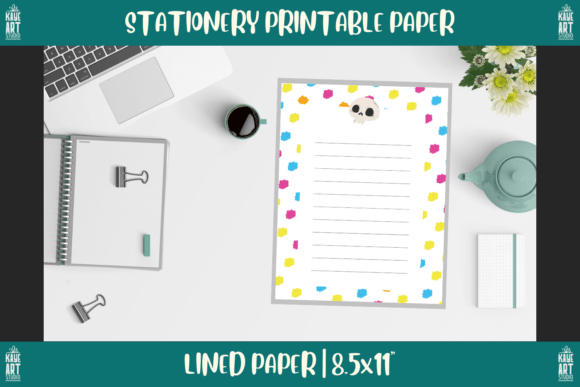
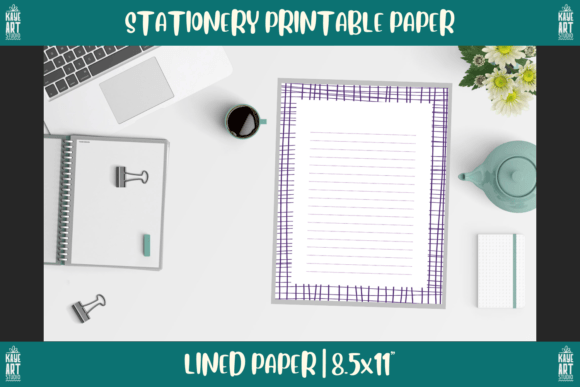
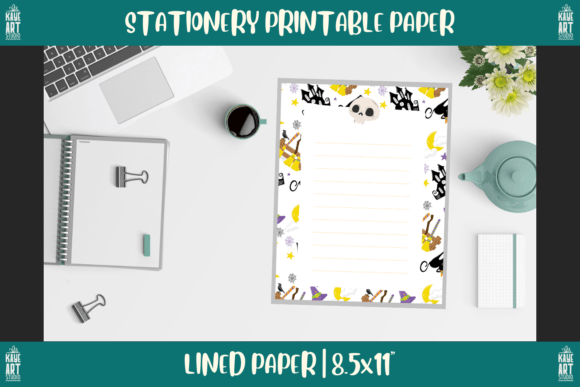
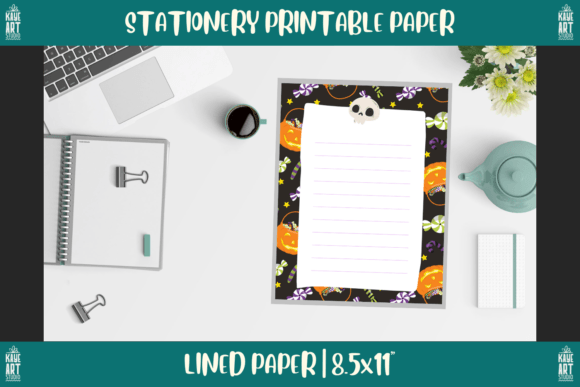
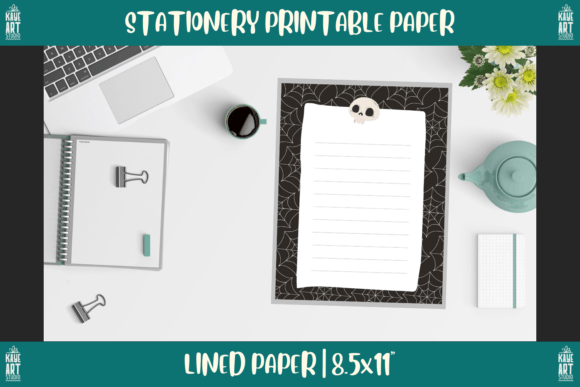
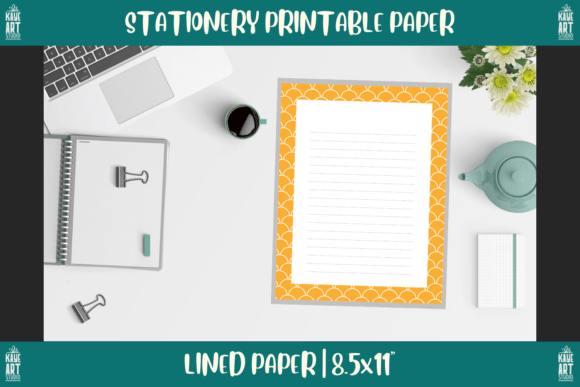
This specific package includes a curated selection of four distinct sheets: one unlined bordered paper, one graph paper, and two lined papers. All share a unified trim size of 8.5×11 inches at 300 DPI, and the assets are provided as both PNG and PDF files. For anyone building low-content books, designing digital planners, assembling stationery kits, or prototyping craft resources, the set eliminates a series of micro-decisions about formatting, resolution, and page balance that can otherwise slow down the creative process.
What Exactly Is Included and Why the Specifics Matter
On the surface, a pack of four printable papers might sound minimal. In practice, the exact composition shapes how people use it. Here is what the set delivers:
- 1 × Unlined Bordered Paper
- 1 × Graph Paper
- 2 × Lined Papers
The presence of two lined variants is worth noting. Typically, a lined page with a border can serve multiple purposes—journals, notebooks, correspondence templates—but having two distinct spacing or styling options allows for more intentional pairing within a single project. For example, a KDP interior might alternate between wider-ruled pages for reflective writing and narrower-ruled pages for quick notes, maintaining the same visual border across both to preserve design cohesion.
Every file in the Bordered Stationery Printable Paper 207 collection adheres to the 8.5×11-inch trim size, which remains the default for most North American printable markets and is easily cropped or scaled for digital use on tablets. The 300 DPI resolution ensures that the borders render sharply whether they are printed on a home laser printer or uploaded to a print-on-demand platform. Offering both PNG and PDF means that users can drop the files into graphic design software with transparency preserved (PNG) or directly open and print without additional tools (PDF). This dual-format approach is a practical choice that respects varying workflow preferences.
Design Character and Visual Consistency
The border itself is the unifying element. While many free printable papers rely on simple clip-art frames that can feel either too ornamental or too sparse, the bordered design here leans functional. It provides a clearly defined writing or drawing area without overwhelming the page. That restraint makes the paper suitable for professional-looking notebooks, planning pages, or stationery where the content remains the focal point. The border carries enough weight to frame the page nicely but does not compete with handwriting, calligraphy, or printed graphics.
For low-content publishing, visual consistency is one of the invisible quality signals that separates a polished product from an amateur assembly. When every page in a gratitude journal, recipe book, or daily planner shares an identical border margin and line weight, the end user perceives the work as cohesive. Bordered Stationery Printable Paper 207 supports that cohesion by making the border element uniform across sheet types, so mixing unlined, lined, and graph pages within the same document does not introduce jarring design shifts. The consistency also simplifies the process of creating matching covers, section dividers, or supplementary printables because the designer already knows the exact spacing and style.
File Quality and Real-World Usability
Print resolution is one area where enthusiasm can outpace real-world needs, but 300 DPI at 8.5×11 inches is an established standard that delivers crisp output on inkjet and laser printers, as well as commercial presses. In testing similar files, the difference between 300 DPI and lower resolutions becomes obvious when borders include fine lines or subtle decorative details. Even though the border style here is relatively understated, the 300 DPI foundation prevents edge pixelation when the files are used in larger print runs or viewed at high magnification on a tablet screen.
The PNG format deserves specific attention. For creators who use software like Photoshop, Affinity Publisher, or even Canva, having individual PNG files with transparent backgrounds (where applicable) allows the bordered stationery to be layered on top of tinted backgrounds, photo textures, or custom designs. PDF files, on the other hand, reduce friction for those who simply need to print immediately. Many educators, workshop facilitators, and small business owners prefer having a PDF they can open and print without navigating design tools. Providing both formats is a pragmatic move that widens the audience without adding complexity.
However, it is important to set realistic expectations. The assets are not editable templates; they are flat, high-resolution ready-to-print papers. For users who might want to move a line, remove the border, or adjust spacing, that will require importing the PNG into editing software and performing manual modifications. This is not a limitation so much as a clarification: the product is a stationary paper pack, not a customizable generator. For most intended use cases—KDP interiors, printable inserts, digital planner backgrounds—the fixed structure is exactly what is needed.
No and Low Content KDP Interiors
One of the most immediate applications is assembling interiors for notebooks, journals, workbooks, and activity books sold through Kindle Direct Publishing. Lined and unlined bordered pages are perennially popular for gratitude journals, prayer journals, travel logs, and memory books. Graph paper expands the range into bullet journals, engineering notebooks, sketching pads, and habit trackers. Because the files are already trimmed to standard dimensions and 300 DPI, they slide directly into PDF manuscripts without resampling issues. This speeds up the creation cycle for authors and publishers who release multiple titles and need to maintain consistent quality across their catalog.
Digital Planners and Tablet Stationery
Digital planning has matured into a significant niche, and users of apps like GoodNotes, Notability, and Xodo appreciate background pages that look like real paper. The bordered stationery in this set provides a structured, realistic feel on a screen. The unlined sheet can serve as a versatile canvas for mind maps or freeform notes, while the graph paper background is a staple for students and professionals who rely on precision layouts. Importing the PNG versions into digital planner hyperlinked PDFs ensures the pages remain sharp even when zooming or annotating with a stylus. The set’s consistency across paper types also makes it easier to design a planner that mixes daily lined pages, weekly graph-based layouts, and blank reflection pages while maintaining a uniform border aesthetic.
Stationery and Craft Projects
Beyond publishing, printable paper packs are workhorses for event planners, calligraphers, and crafters. The unlined bordered sheet can become custom thank-you notes, menu inserts, or poetry cards. Lined sheets are commonly printed as letter-writing paper for pen pal exchanges or as journaling inserts for ring-bound planners and traveler’s notebooks. The graph paper, often underutilized in stationery contexts, works well for sewing pattern drafts, cross-stitch charting, or bulleted fitness logs. Because the files are indefinitely reusable, the per-project cost is effectively zero after the initial purchase, which appeals to small business owners managing tight stationery or craft product margins.
Who Stands to Gain the Most
The Bordered Stationery Printable Paper 207 set suits a range of profiles, but a few groups are especially well-positioned to extract value from it:
- Low-content publishers who need to produce multiple notebook and journal interiors quickly and want to avoid designing basic page layouts from scratch.
- Digital planner creators seeking clean, high-resolution backgrounds that reduce the risk of pixelation on Retina or high-DPI screens.
- Educators and coaches who regularly print worksheets, reflection pages, or handwriting practice sheets and benefit from having a uniform bordered template.
- Freelance graphic designers who build KDP interiors or printable products for clients and welcome ready-made components that cut down production time.
- Crafters and stationery entrepreneurs incorporating printed inserts into physical products such as wedding invitation suites, leather journal refills, or subscription boxes.
The set is less ideal for someone who needs fully customizable layouts or requires specialty sizes (A4, A5, square formats) without additional scaling. While 8.5×11 inches can be downsized or cropped, that extra step may be a minor annoyance for users working exclusively in international dimensions. That said, the majority of North American KDP products and printables are designed around US letter, so this is a reasonable default.
Practical Considerations and Potential Limitations
No printable asset set is universally flawless. Here are a few observations to help prospective users evaluate whether this collection aligns with their workflow:
- Border style permanence: The border design is fixed. Buyers who later decide they want a dashed border, a double rule, or a corner motif will need to edit the files or source a different set. This is not a shortcoming of the product itself but a factor in long-term flexibility.
- Lined paper spacing details: Because the set includes two lined pages, users benefit from variety, but those with very specific line-height requirements—such as those creating handwriting practice sheets for young children—should verify the ruling works for their target audience. Without seeing the exact spacing, it may be prudent to assume a standard adult journal ruling.
- Graph paper grid size: Graph paper utility depends heavily on grid dimensions. The product description does not specify the grid spacing (e.g., ¼ inch, 5mm), so creators intending to use it for technical drawing or math worksheets may need to confirm the measurement before integrating it into a final product. For general brainstorming, bullet journaling, or design sketches, the exact spacing is often less critical.
- Color profiles: The files are likely black and white or grayscale, given the nature of bordered stationery. This is appropriate for the intended print applications, but anyone hoping to print the border in a color other than black will need to make digital adjustments. The PNG format makes recoloring fairly straightforward in most graphics software.
- Reuse licensing: As with any resource used in commercial products, buyers should confirm the included license terms. Most printable stationery packs intended for KDP use allow incorporation into finished physical or digital products but prohibit reselling the files as-is. Understanding this distinction protects both the buyer and the original creator.
None of these points diminish the utility of Bordered Stationery Printable Paper 207 for its core audience. Rather, they help define the boundaries within which the product performs most reliably.
Long-Term Value in a Saturated Printable Market
Printable stationery is a category where free options abound, and that can make a paid set seem unnecessary at first glance. The difference often comes down to time, consistency, and output quality. Hunting for free bordered papers that match in style, align on trim size, and deliver true 300 DPI resolution absorbs hours that could be spent on content development or marketing. When that time is multiplied across multiple book interiors or planner designs, the fixed cost of a coherent, tested set begins to look less like an expense and more like a productivity investment.
Furthermore, the combination of unlined, graph, and dual lined pages within a single product reduces the need to license similar assets from multiple sources. A KDP creator assembling a 120-page daily reflection journal might use the unlined page for a daily prompt section, the lined pages for extended writing, and the graph page for a monthly tracker—all while keeping visual borders consistent. Achieving that with disparate free downloads is often messy and leads to subtle quality inconsistencies that loyal customers eventually notice.
For digital planner sellers, the same cross-page consistency helps build a recognizable brand language. Customers who buy a dated planner one year are more likely to return if the aesthetic remains stable, and having a reliable source of base papers simplifies year-over-year updates.
Integrating the Papers into a Cohesive Final Product
From a practical lens, the most successful outcomes with Bordered Stationery Printable Paper 207 come when users treat the sheets as foundational layers rather than finished pages. Adding subtle section headers, page numbers, or customizable date areas in the margin turns the blank bordered canvas into a specialized tool. The unlined sheet, for instance, can be overlaid with a daily affirmation box in a digital planner, while the graph page can receive a minimalist weekly dashboard layout. The underlying border remains consistent, so the end product feels intentionally designed rather than cobbled together.
Another professional approach involves printing the sheets on different paper stocks to test tactile quality. The same PDF printed on 24lb bond feels distinct from a 70lb text stock, and for physical stationery products, that material choice matters. Since the files are not locked behind proprietary software, users are free to experiment with paper types and printer settings, which is a quiet but significant advantage for small-batch stationery producers.
At its core, this printable paper set does not pretend to be a revolutionary design toolkit. It is a straightforward, well-specified collection of bordered stationery pages that fills a practical need for people who regularly build notebooks, planners, worksheets, and craft printables. The file quality is appropriate for commercial use, the format variety respects different technical comfort levels, and the page selection covers the most common low-content interior types without unnecessary extras. For the right buyer—someone who values consistency and wants to stop searching for matching papers every time they start a project—it is a quietly reliable resource that tends to pay for itself in recovered time and reduced frustration.