A Professional Mindfulness Journal Template for KDP
Imagine launching your mindfulness journal on Amazon KDP with a design that feels both serene and strategically crafted to engage readers from the very first page.
In the world of digital content creation and self-publishing, the interior layout of a book is a critical piece of visual communication. It's not just about filling pages with text; it's about creating an environment that supports the content's purpose. For a mindfulness journal, this means a design that promotes clarity, focus, and a sense of calm through thoughtful typography, balanced visual hierarchy, and a clean, purposeful structure. The MINDFULNESS JOURNAL KDP InteriorTemplate is built to deliver precisely that, offering a ready-to-use foundation that combines modern aesthetics with practical functionality.
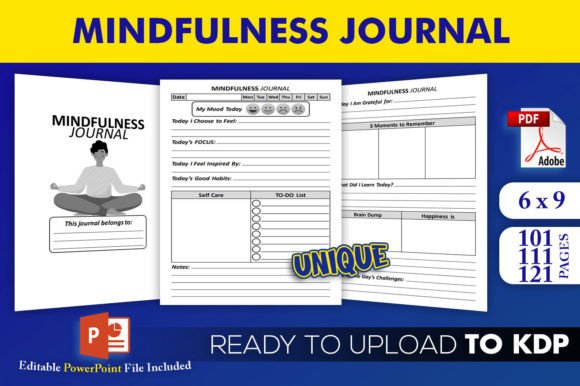
This resource is more than a simple set of pages; it's a comprehensive design system tailored for the 6x9" trim size, a popular and reader-friendly format. It includes editable PowerPoint source files for customization, alongside three tested PDF interiors (101, 111, and 121 pages) ready for immediate upload. This flexibility is key for designers and creators who need to adapt a template to fit a specific voice or add unique prompts without rebuilding the entire layout from scratch.
The Role of Design in Mindfulness Content
Effective branding and user experience extend to every product touchpoint, including the pages of a book. A journal's interior design directly impacts how a user interacts with the content. A cluttered, poorly organized layout can distract and frustrate, undermining the journal's core goal of fostering mindfulness. Conversely, a professionally designed interior with consistent margins, elegant page numbering, and well-spaced entry areas enhances the user experience, making the act of journaling feel more intentional and supportive.
This template addresses those needs by providing a professional presentation that establishes trust and quality from the outset. When a reader opens a journal that exhibits clean editorial design, they immediately perceive a higher value, which is crucial for standing out in a crowded marketplace like KDP.
Key Design Elements and Their Impact
Let's break down the specific design elements that contribute to a successful journal interior:
- Typography: The choice of font and its spacing affects readability and mood. Serif fonts can feel traditional and grounded, while clean sans-serif fonts offer a modern, minimal vibe. Proper line height and margin design prevent eye strain and create a comfortable reading flow.
- Visual Hierarchy: Clear headings for sections, distinct areas for daily entries, and subtle guides for prompts help users navigate the journal effortlessly. This hierarchy organizes the content without being visually loud.
- Layout Consistency: A uniform design across all 101, 111, or 121 pages creates a cohesive experience. This consistency is vital for brand identity, making your journal a recognizable product.
- No-Bleed, Print-Ready Format: The template's no-bleed specification and high-resolution files ensure the design translates perfectly to physical print, maintaining crisp edges and clean text, which is a fundamental aspect of quality print design.
Practical Applications and Creative Adaptation
The provided editable PowerPoint (.pptx) source file unlocks a wide range of creative projects. This isn't just for publishing a single journal; it's a versatile asset for designers. You can adapt the core layout principles for:
- Digital Products: Beyond KDP, the interiors can inspire layouts for digital PDF workbooks or guided journals sold on other platforms.
- Marketing Materials: The clean page structures can serve as inspiration for creating complementary promotional PDFs, email newsletters, or blog content that maintains visual brand consistency.
- Extended Brand Systems: The color palette and typography choices established in the journal can influence wider brand identity, informing web design, social media graphics, and even packaging design for related physical products.
When evaluating or customizing such a template, consider your audience's expectations and your core design goals. Is the journal for beginners needing lots of guidance, or for advanced practitioners preferring open space? The template’s multiple page-count options allow you to choose the right density. Scalability is also key; a well-structured design file allows you to easily add new page types or modify elements without breaking the overall composition.
Ultimately, investing in a professionally designed template like the MINDFULNESS JOURNAL KDP InteriorTemplate streamlines your design workflow and elevates the final product. It shifts the focus from technical layout struggles to content creation and creative applications. In a visual culture where quality design is synonymous with credibility and care, the interior of your book is a powerful statement. It communicates that you value not only the words within but also the experience of engaging with them. By starting with a foundation built on solid graphic design principles, you ensure your mindfulness journal delivers both aesthetic tranquility and functional clarity, helping your readers—and your creative project—find a more focused path forward.