Sales Logbook - KDP Interior
If you’ve ever stared at a blank screen wondering how to structure a simple logbook for Amazon KDP, you know how quickly a straightforward idea becomes a formatting headache. The Sales Logbook - KDP Interior takes that friction away. It’s not a promise of overnight success or a magic template that will rank #1 for you. Instead, it’s a practical, ready-to-use interior file that handles the technical heavy lifting so you can focus on the actual selling part of your publishing business—whether that’s serving a niche audience, building a low-content book brand, or creating a useful tool people actually want to write in.
What You Actually Get With This Sales Logbook Interior
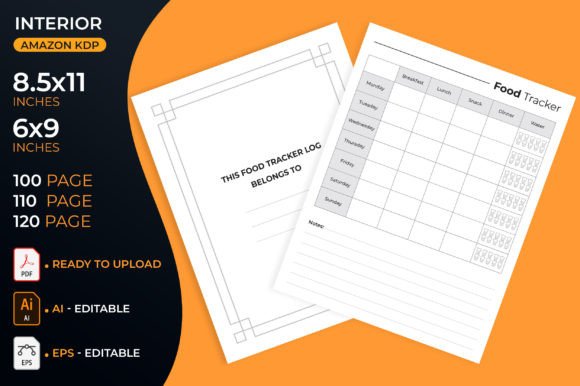
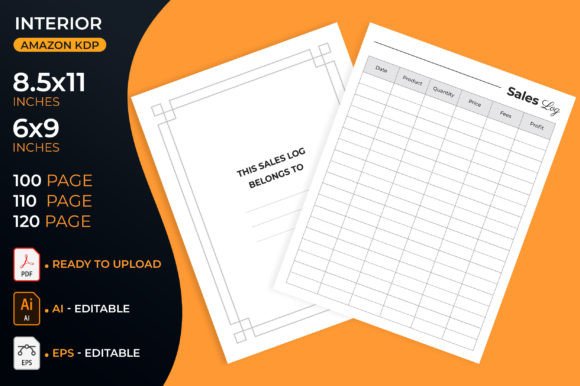
At its core, this package is a set of pre-designed pages made specifically for recording sales activity. The interior comes formatted for Amazon KDP’s requirements and has already been tested for upload, which means you skip the trial-and-error phase that trips up so many first-time publishers. You receive 100 formatted pages, but options for 110 and 120 pages are also included, giving you flexibility if you want a thicker feel without tinkering with the layout yourself. Two common trim sizes—8.5×11 inches and 6×9 inches—are provided, which cover the majority of low-content books on the marketplace.
Beyond just PDFs, you’ll find editable source files. Two AI Illustrator CC files, two EPS files (compatible with CS5 and above), and multiple PDFs are part of the download. There’s even a single-paper JPG, PNG, and PDF option on the off chance you want to drag a page into PowerPoint or Google Slides and build your own custom-length version. This mix of file types means you’re not locked into a rigid template. You can tweak elements if you have the software, or use the print-ready PDFs exactly as they are.
When a Sales Logbook Becomes a Genuinely Useful Product
A blank sales log doesn’t sound glamorous, but it solves a daily, repetitive need for a surprising number of people. Think of a small coffee shop owner who tracks weekly pastry sales before placing supplier orders. They’re not going to fire up an app every time—many still prefer a dedicated book that sits next to the register. A handmade jewelry seller moving from one craft fair to the next often scribbles down what sold, at what price, and which designs attracted the most attention. That information is gold for planning the next event, but only if it’s captured in a consistent, organized way.
The Sales Logbook - KDP Interior works because it already structures that information with designated spaces for date, item, quantity, price, and notes. The user just fills it in. For a freelance photographer tracking mini-session bookings and payments during a busy holiday rush, flipping open a clean logbook is faster than navigating a spreadsheet on a phone. The interior’s no-bleed design means the content stays comfortably away from the edges, so nothing gets lost in the binding—a small detail that makes the physical book feel professional.
Who Finds This Kind of Pre-Formatted Tool Useful
Self-publishers see the most immediate benefit, but the end users of your finished book come from all directions. A business coach might bundle a branded sales logbook with their online course as a client accountability tool. An Etsy seller offering printable planner inserts can use the editable files to add her own header and sell a physical spiral-bound version locally. Even a soap maker who sells at farmers’ markets can appreciate having a dedicated log instead of sticky notes that disappear into the abyss of a tote bag.
Educators and workshop facilitators sometimes repurpose sales logbooks in unexpected ways—a fundraising coordinator for a school club might print a few copies to track concession stand sales during football games. The interior’s straightforward layout makes it adaptable. You don’t need to explain how to use it because the categories are intuitive. That’s part of the appeal: it’s a backdrop for someone else’s daily record-keeping, not a complicated system they have to learn.
Where This Interior Shows Up in Real Life
You’ll spot similar logbooks anywhere cash or inventory exchanges hands in a low-tech environment. A mobile pet groomer who brings a portable printer might bind a 6×9 version to fit in the glove box, jotting down services rendered and tips received. A home baker taking custom cake orders over the phone can use the 8.5×11 size as a dedicated order log that stays open on the counter. Even at a pop-up vintage clothing booth, a sales logbook becomes a quick reference for which sizes moved fastest.
Because the interior is delivered as a digital file, publishers can list a single title that ordinary people order, receive, and use almost immediately. The customer prints it at home, takes it to a local print shop, or simply uses it as a digital fillable log on a tablet with a stylus. The fact that it’s KDP-ready means you don’t have to explain compatibility—Amazon does the heavy lifting with printing and shipping, and the interior files you start with are already inside their specifications.
Why Someone Chooses a Pre-Tested Interior Over Starting from Scratch
Designing a logbook page from a blank canvas seems easy until you realize margins shift, text boxes misalign, and what looked fine on your screen prints with headers cut off. The Sales Logbook - KDP Interior removes that technical guesswork. The “no bleed” setting is already applied, which is huge for anyone who has wasted hours adjusting bleeds only to have the file rejected. Dimensions are exact. Page count variations are ready, so you aren’t manually duplicating pages in a PDF editor and praying the alignment holds.
Time is the biggest factor. For a publisher managing multiple niches, outsourcing or creating interiors from zero eats into profitability. One person might test a sales logbook in the fitness niche (tracking personal training sessions sold), another in the arts and crafts space, and a third in home business supplies. With a ready interior, they can experiment with different covers and keywords quickly, seeing what resonates without rebuilding the core structure every time. If one niche flops, the interior file isn’t wasted—it gets repurposed for the next idea with a fresh cover.
What to Keep in Mind Before You Upload
Even a polished interior requires a few decisions. The 100-page version is a solid standard, but think about how your target customer will use it. A daily sales tracker for a busy store might need 120 pages to last a quarter. A seasonal pop-up shop might only need 100. The 110-page option splits the difference. Test how the spine thickness looks with KDP’s cover calculator; a thinner book might feel flimsy, while a thicker one suggests durability.
You’ll also want to verify the trim size aligns with your cover design. The 8.5×11 is great for desk use and feels more like a workbook. The 6×9 is portable and often perceived as more professional for a pocket logbook. If you plan to sell physical copies on Amazon, upload the PDF as-is and order a proof. Check that the page numbers or decorative elements don’t wander too close to the edge after printing. Since the files are tested, this should go smoothly, but a quick physical check never hurts.
If you choose to edit the AI or EPS files, be mindful of fonts. Stick to the embedded typefaces or outline text before saving a new PDF. The single-page JPG and PowerPoint-friendly options give you a fallback if you’re more comfortable in Google Slides. That flexibility is especially helpful for non-designers who want to add a simple logo or company name to each page without learning Illustrator.
A Few Real Scenarios That Show How the Interior Gets Used
Imagine a blogger who runs a small digital product shop. She creates a “Weekly Sales Tracker” using this interior, pairs it with a bright, minimalist cover, and publishes it on KDP. Her readers—other bloggers and online sellers—buy it without her having to build a complex marketing funnel. The interior did the heavy lifting; she just connected the dots.
Another example: a craft beer brewery that hosts tasting events. They use a printed 8.5×11 logbook to track limited release bottle sales, glassware sold, and tasting flight purchases across multiple weekends. The consistent format makes tallying inventory at the end of the month straightforward. The brewery didn't design the pages; they simply bought the book from Amazon, but the publisher who used this interior made it available.
A freelance personal chef who cooks for multiple families each week uses the 6×9 log to record meal packages sold, payment status, and dietary notes for repeat clients. She values that the interior has a clean, distraction-free design—nothing competes with her own handwriting and shorthand. That’s exactly the kind of practical reception a well-built logbook generates.
Making It Your Own Without Starting Over
Even if you don’t own Illustrator, you can create a version with a specific page count using PowerPoint or Google Slides. The single-paper file is intended for exactly that. Drag the page image onto a slide, duplicate it, and save as PDF. You control the length without touching the original source files. This matters when you want to offer a 50-page “quick tracker” or a 200-page annual journal without redesigning anything.
The editable AI and EPS files appeal to publishers who have basic design chops and want to swap color accents, add QR codes to resource pages, or insert seasonal touches. A sales logbook aimed at wedding photographers could include a subtle floral motif in the footer. Because the structure is already locked in, the risk of introducing formatting errors stays low. You keep the reliable skeleton and dress it up differently for each niche.
How This Supports a Long-Term Publishing Approach
Low-content publishing rarely rewards a one-and-done mentality. The creators who do well often build small catalogs around related themes. A sales logbook is a utility product—it doesn't rely on trends or strong opinions. It stays relevant. By having an interior that’s already formatted and tested, you can launch variations with confidence. A real estate agent logbook, a craft show sales tracker, a food truck daily ledger—each one uses the same base, but the cover and title shift the audience.
Publishing speed matters because it lets you test more ideas in the same window. With the Sales Logbook - KDP Interior, you’re not spending afternoons tweaking line spacing. You pick the size, select the page count, upload, and move on to creating a cover that speaks to a specific buyer. If you find a winning combination, you can quickly produce a similar product for an adjacent niche using the editable files to swap headers or small branding elements. That flywheel effect is where the real value lives, not in the one-time download, but in how it fits into a repeatable workflow.
No product sells itself, but eliminating technical barriers gives you room to do the work that actually influences sales—researching what your audience needs, writing a helpful description, and designing a cover that stops the scroll. The interior is the quiet foundation. When it’s done right, the buyer never has to think about it. They just open the book, grab a pen, and start logging their sales, which is exactly what they came for.