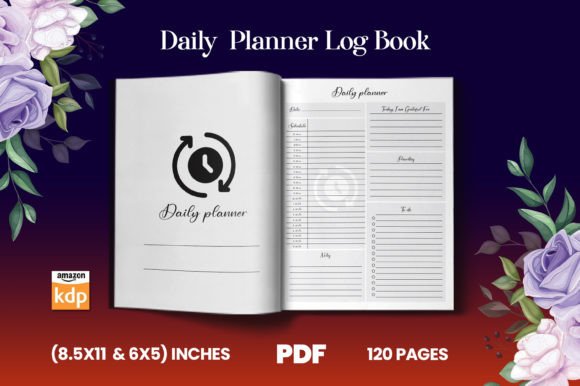
Daily Planner Log Book for Designers
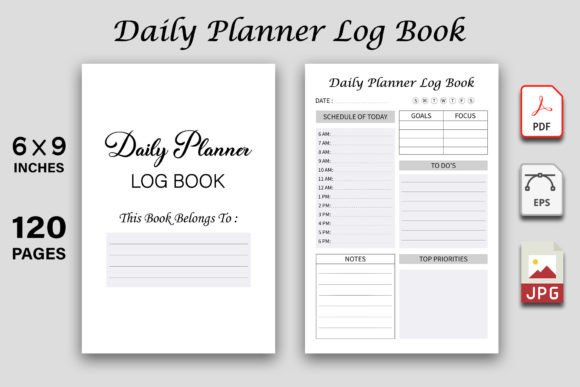
There is something quietly transformative about putting pen to paper, especially when that paper has been thoughtfully designed. A Daily Planner Log Book is more than a scheduling tool—it is a compact canvas where visual hierarchy, typography, and functional layout converge. For graphic designers, marketers, and brand strategists who evaluate every visual touchpoint, this printable daily planner offers a refreshing intersection of structure and creative freedom. You simply download, print, and begin shaping your day with intention—no apps, no notifications, just pure analog clarity on 120 high-quality pure white pages.
Why Physical Planners Still Matter in a Digital Design World
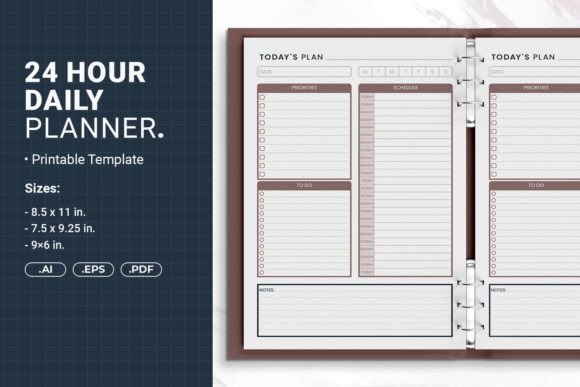
Screen fatigue is real. Creatives spend hours refining UI design, adjusting color palettes, and polishing social media graphics, yet the act of physically writing activates a different cognitive mode. A printable planner bridges this gap. The 6 x 9 portable size slips into a bag alongside sketchbooks, while the 8.5 x 11 inch version offers generous room for thumbnails, wireframe scribbles, and detailed task breakdowns. Both formats reflect a principle every designer knows: the container shapes the content. When you choose a well-proportioned log book, you are already making a visual design decision that supports clarity.
Design Lessons Hidden Inside a Daily Planner Layout
Pick up any effective planner and you will notice embedded design systems at work. Grid structures organize time blocks. Contrast distinguishes headers from body entries. White space—often overlooked—gives the eye room to scan priorities without overwhelm. These are the same fundamentals that drive editorial design, packaging design, and web design. A Daily Planner Log Book essentially functions as a microcosm of layout thinking: information must be scannable, actionable, and aesthetically cohesive. Designers who use these tools daily train their eye for proportion, alignment, and restraint.
Typography in Log Books: Function Meets Personality
Even in a printable planner, type choices matter enormously. The font used for dates, section labels, and prompts sets the tone. A clean sans-serif conveys modern minimalism—ideal for brand identity work and corporate creative projects. A serif selection might evoke editorial sophistication, suiting writers and publishers. For designers creating their own planner variations, this becomes a live case study in pairing typefaces for readability at small sizes. The 120 high-quality pure white papers ensure crisp reproduction, so even hairline fonts and delicate icons retain their integrity after printing.
Practical Applications Across Creative Workflows
A printable daily planner integrates into more workflows than you might expect. Consider how a Daily Planner Log Book serves different creative roles:
- Branding and logo design projects — track client revision rounds, file export deadlines, and concept milestones in one place.
- Social media content calendars — map post themes, caption notes, and visual asset checklists week by week.
- UI/UX design sprints — log research observations, usability test findings, and iteration goals without switching tabs.
- Packaging and print production — monitor proofing stages, printer specifications, and material sampling timelines.
- Digital marketing campaigns — coordinate email sequences, ad creative rotations, and landing page update schedules.
- Personal creative practice — block maker time, sketchbook sessions, and portfolio maintenance days.
How Designers Can Customize a Printable Planner System
The beauty of a downloadable log book lies in its flexibility. Unlike bound planners, a printable format lets designers experiment with paper stocks, binding methods, and even color treatments. You might print the 6 x 9 version on warm cream stock for a tactile, vintage feel suited to design inspiration journaling. Or print the 8.5 x 11 on bright white for maximum contrast during client-facing note-taking. Some creatives add their own logo or monogram before printing, turning the planner into a subtle brand identity asset that reinforces professional presentation during meetings.
Building Visual Consistency Across Creative Assets
Consistency is the backbone of strong graphic design. When a designer adopts a single planner format across months, a rhythm emerges. Task categories use the same iconography. Priority markers follow a set color palette. This repetition mirrors how design systems and style guides function in larger branding contexts. A Daily Planner Log Book subtly trains the mind to think in reusable components, a mindset that directly translates to building cohesive websites, presentation decks, and marketing materials where consistency builds trust.
Evaluating a Planner's Design Quality: What to Look For
Not all printable planners are created with design rigor. Before committing a year of use to one, assess the same criteria you would apply to any creative asset. Check the paper specification—120 high-quality pure white pages suggest a premium weight that resists bleed-through, a practical concern for anyone using fountain pens, markers, or heavy graphite. Evaluate the spatial logic: do margins allow comfortable writing near the binding edge? Are section breaks clearly articulated? Does the visual hierarchy guide you naturally from date to priority to notes? These details separate a tool that merely functions from one that genuinely enhances your design workflow.
Scalability Across Small and Large Formats
The dual-size availability—small portable 6 x 9 and full-page 8.5 x 11 inches—addresses a real usability need. The compact format excels for on-the-go capture: jotting ideas during gallery visits, noting typography references in cafés, or logging quick client feedback. The larger format suits desk-based planning where mental mapping benefits from expanded space. Both sizes maintain proportional integrity, which matters when your eye is trained to detect disharmony in modern aesthetics. A planner that scales gracefully respects the same principles as responsive web design.
Integrating the Planner into a Designer's Daily Rhythm
Structured reflection is a quiet superpower. Ten minutes in the morning with a Daily Planner Log Book replaces reactive scrambling with deliberate prioritization. Designers working across digital products, advertising campaigns, or merchandise lines can segment each day into deep work blocks, collaboration windows, and review periods. The log book becomes a lightweight project management surface where nothing pings, nothing refreshes, and nothing algorithms you into distraction. In an era of relentless connectivity, this analog anchor genuinely improves both output quality and creative satisfaction.
Thoughtful design choices ripple outward. The paper you write on, the layout you trust, the typography that greets you each morning—these details shape how you think and how you show up for your work. A well-crafted printable planner supports not just productivity but a deeper alignment with the visual standards you champion in every creative project. When your planning tool embodies the principles of clarity, proportion, and intentionality, it becomes more than a log book. It becomes a quiet daily reminder of why you fell in love with design in the first place.