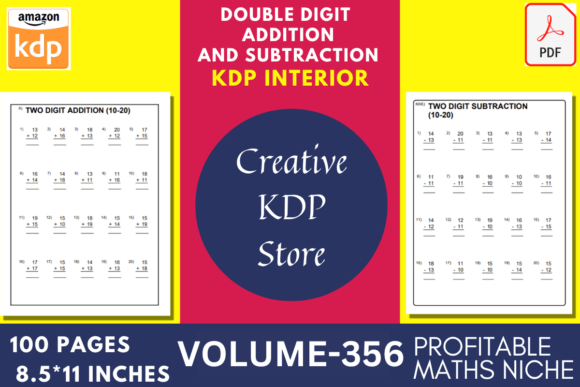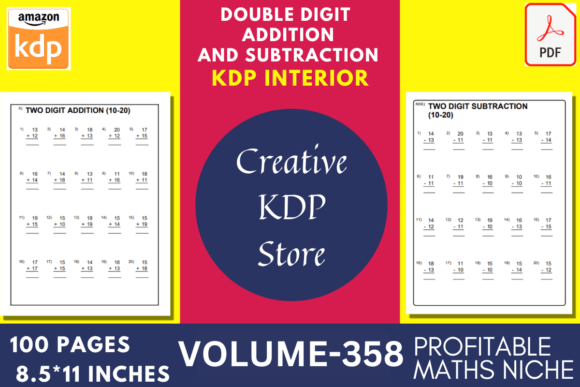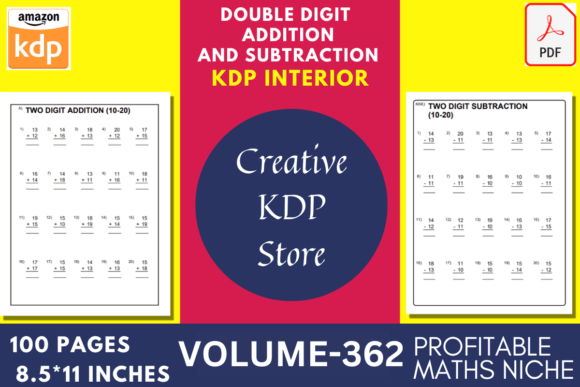
Addition Worksheets for 2nd, 3rd Grade Mastery
Quiet mornings at the kitchen table. The soft scratch of a pencil against paper. A child's brow furrowing, then smoothing as a puzzle clicks into place. That's the rhythm of genuine math confidence—not a flashy app, not a gamified distraction, but the tangible, focused repetition that builds real numerical fluency. This Double Digit Addition Math workbook doesn't try to entertain with animations or sound effects. It trusts something far more reliable: the calm authority of 300 pages of well-structured practice, designed specifically for 2nd, 3rd, and even 4th grade learners who are ready to move from counting on fingers to internalizing place value.
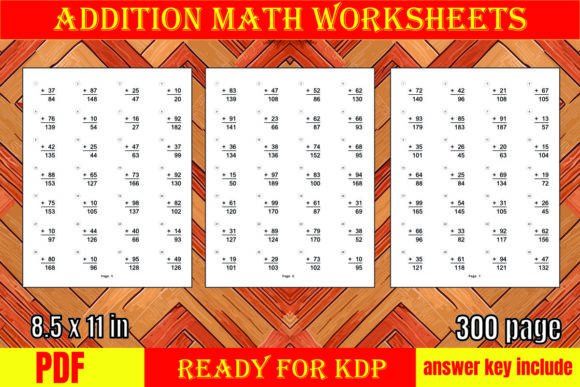
For the publisher, the content creator, the homeschooling parent running a small educational brand, or the KDP entrepreneur seeking a high-value, low-prep product, this collection of 8,400 addition operations represents something rare: a thoughtfully constructed asset that respects both the learner's developmental stage and the designer's need for clean, professionally formatted interiors. Every page adheres to 8.5 x 11 inch dimensions, the standard that feels spacious without being overwhelming, giving young mathematicians room to write, erase, and think.
A Quiet Engine for Number Sense
Double-digit addition is more than a skill. It's the bridge between concrete counting and abstract mathematical reasoning. When a second grader stacks 47 and 38 vertically, they aren't just producing 85—they're internalizing the decimal system, grasping that ten ones become a new ten, learning to hold numbers in working memory. This workbook understands that progression intuitively. The problems aren't randomly generated chaos. They're sequenced to build momentum, starting with straightforward addends that boost confidence, then gradually introducing the elegant complexity of regrouping (what many of us learned as "carrying").
What makes this collection particularly valuable for designers and publishers is its structural integrity. The answer key is complete and clearly organized, making it simple to create a separate teacher's edition, a self-checking student version, or a digital download bonus. The PDF is print-ready, meaning no awkward margin adjustments, no font substitutions, no last-minute panic when sending files to a printer or uploading to Amazon KDP. The interior is crisp, consistent, and devoid of clip-art clutter—leaning into a modern typography sensibility that lets the mathematics breathe.
Why 300 Pages Changes Everything
Most workbooks in the educational marketplace hover around 80 to 120 pages. They feel thin. Disposable. A 300-page volume signals permanence. It lives on a shelf. It gets pulled out over the course of a school year, or even across multiple children. For the small business owner or educational brand strategist, this page count translates directly into perceived value. A customer picks it up (or views the listing) and immediately understands they're purchasing a substantial resource, not a pamphlet.
Those 8,400 operations distribute across the pages in a layout that avoids visual fatigue. The grids are generous. Number alignment is meticulously consistent. For a child who struggles with visual processing or dysgraphia, the predictable structure reduces cognitive load. They don't have to decode a new layout every time they turn the page—they simply practice math. That kind of design restraint is often what separates a professional educational product from an amateur one.
Where This Resource Finds Its Audience
The obvious answer is the classroom, but that's only the beginning. This PDF-ready workbook slots into surprisingly diverse creative and commercial projects:
- KDP self-publishers looking for a high-content, low-competition niche that generates steady royalties. Math workbooks for specific grade levels have consistent search volume and dedicated buyers, particularly parents supplementing school curriculum.
- Educational bloggers and content creators who need lead magnets. Offering 10 free pages from this workbook as a subscriber bonus builds an email list of engaged parents and teachers. The full 300-page version becomes a natural upsell.
- Tutors and learning pod organizers who want to print exactly what they need, when they need it. No running to the teacher supply store. No waiting for shipping. The PDF format means infinite copies for a single class or client roster.
- Homeschool co-ops and charter school programs that rely on affordable, reproducible materials. A one-time download provides a year's worth of targeted addition practice.
- Print-on-demand designers who pair the workbook interior with a custom cover, creating a physical product that stands out on Amazon or in a local boutique.
Each of these applications shares a common thread: the need for reliable, professionally formatted content that doesn't require the creator to be a math curriculum expert. The sequencing is already done. The answer key is already verified. The hourly labor of creating, checking, and formatting 8,400 problems is completely removed from the equation.
The Branding Advantage of Clean Design Assets
When a publisher or small business owner uses this type of workbook as part of their product line, they're making a subtle statement about their brand identity. A well-laid-out worksheet communicates professionalism in ways that a blurry, pixelated, or inconsistently spaced alternative never can. The 8.5 x 11 inch format prints cleanly on any home or office printer. Margins are generous enough to allow for hole-punching and binder storage. The design choices—though invisible to most end users—build trust. Parents may not consciously notice the consistency of line weights or the logical grouping of problems, but they certainly notice when those things are absent.
For the marketer or brand strategist, this reliability translates into reviews, repeat customers, and word-of-mouth referrals. A parent who uses this workbook with one child is highly likely to purchase other grade-level resources from the same brand. The workbook becomes the entry point to a broader relationship.
Practical Considerations for Publishers and Creators
Before uploading to KDP or listing on a digital marketplace, a few practical checks make all the difference. First, review the answer key placement. Some creators prefer it at the back of the book for a seamless student experience; others remove it entirely and sell it as a separate companion product. The PDF format makes this kind of rearranging straightforward with even basic software.
Next, consider cover design. The interior is black and white, clean and functional. A vibrant, professionally designed cover that speaks to parents' aspirations—confidence, independence, academic success—creates a compelling contrast. This is where a creative font or display font can make the title pop, but the interior remains refreshingly free of distractions. The typeface inside the workbook likely adheres to a highly legible, age-appropriate sans serif or slab serif that supports early readers without decorative flourishes that might confuse letter recognition.
Testing with a real child is invaluable. Print five pages. Watch where their attention drifts. Notice if the problem spacing supports their handwriting size. Adjust margins if necessary. The digital file's true power is its editability. If you want to add a name line, a date field, or a motivational quote at the bottom of each page, you can. That customization becomes a point of differentiation in a crowded market.
Readability and the Visual Hierarchy of Learning
A math worksheet has a quiet but critical visual hierarchy. The problem numbers (1 through however many per page) guide the eye down the page. The horizontal lines where answers are written create a rhythm. The equal signs align, forming an almost architectural vertical structure. When these elements are consistently placed, the child's brain stops processing layout and focuses entirely on computation. That's the goal—not a worksheet that looks exciting, but one that becomes a transparent tool for thinking.
The answer key should follow similar principles. A scannable layout lets a teacher or parent check work quickly, often while cooking dinner or supervising another child. Grouping answers in blocks that mirror the worksheet's structure reduces eye strain and frustration.
Moving Beyond the Single Sale
One workbook, even a 300-page one, can anchor an entire product ecosystem. A suite of addition worksheets for 2nd, 3rd grade naturally extends into subtraction, multiplication, word problems, timed drills, or seasonal-themed versions. The downloadable format means no inventory risk. You can test new concepts, gather customer feedback, and iterate quickly—a pace that traditional textbook publishers simply cannot match.
For the hobbyist or craft-oriented entrepreneur, bundling printable worksheets with physical manipulatives—like a custom set of wooden number tiles or a laminated place-value mat—creates a multisensory kit that commands a premium price. The workbook is the backbone; the tangible components add texture and play.
The digital product space rewards depth over breadth. A 300-page resource signals that you're not skimming the surface. You're providing something complete. Something a parent can trust to carry their child through months of steady progress. That trust is the foundation of any sustainable creative or publishing business, whether you're selling on Etsy, Teachers Pay Teachers, or your own Shopify store.
Ultimately, this isn't just a collection of addition problems. It's a framework for building confidence—in the child who finally understands regrouping, in the parent who feels equipped to support learning at home, and in the entrepreneur who launches a product they're genuinely proud to put their name on. The numbers add up. They always do, when the foundation is this solid.